
2026 Translation Prize Winners
June 10, 2026
We are delighted to announce the winners of this year’s Translation Prize, honoring excellence in French-to-English translations for literary works in fiction and nonfiction published in 2025.
A jury of distinguished translators and literary professionals evaluates the Translation Prize submissions each year for technical, stylistic, and literary excellence. More than 75 literary works have been awarded the French-American Foundation’s Translation Prize since 1986. This unique program supports literary translation by keeping it a relevant and valuable element of the intellectual and cultural exchange between France and the United States. Literary translations give voice to authors beyond their native languages, bridging cultures and expanding readership. The French-American Foundation’s Translation Prize guides these important works of French literature to the American market.
This program was made possible through the generous support of the Florence Gould Foundation, the Foundation’s Board of Directors, our partners, and individual donors.
FICTION WINNER
Charlotte Mandell for her translation of The Deserters by Mathias Énard (New Directions Publishing)
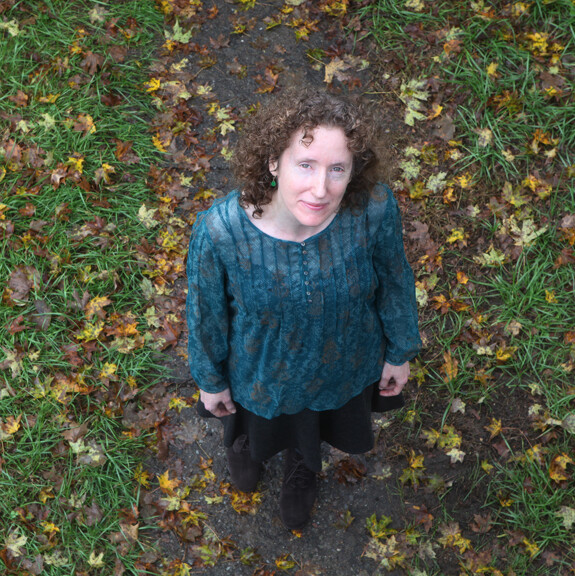 Charlotte Mandell has translated over 50 books from the French, including works by Maurice Blanchot, Marcel Proust, and Mathias Énard. In 2024 she received the honor of Chevalier de l’Ordre des Arts et des Lettres from the French government, as well as the Thornton Wilder Prize for Translation from the Academy of Arts and Letters. In 2017 her translation of Compass by Mathias Énard was shortlisted for the International Booker Prize and received the 2018 ALTA National Translation Award in Prose. Also in 2017, her co-translation (with Lauren Elkin) of Jean Cocteau by Claude Arnaud was a recipient of the French-American Foundation Translation Prize. Some forthcoming translations are Perfecting the Shot by Mathias Énard; London by Louis-Ferdinand Céline; and Proust: A Family Affair by Laure Murat. She lives in the Hudson Valley with her husband, the poet Robert Kelly.
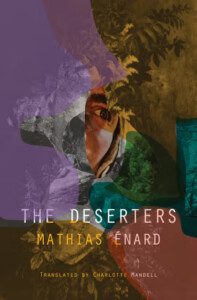
About The Deserters: A filthy and exhausted soldier emerges from the Mediterranean wilderness. He is fleeing an unspecified war, trying to escape the incessant violence and find refuge in solitude, but a chance encounter with a civilian forces him to make a difficult decision. On September 11, 2001, aboard a small cruise ship, a scientific conference is honoring the East German mathematician Paul Heudeber, a committed communist and antifascist and a survivor of Buchenwald.
As these two narrative threads weave and develop, Mathias Énard’s dazzling, erudite prose vividly illuminates the devastations of war. Brilliantly translated by Charlotte Mandell, The Deserters is a triumphant novel that balances the weight of love and politics, loyalty and belief, hope and survival.
“There are two separate narratives in Mathias Énard’s THE DESERTERS: one is both poetic and straightforward, written in simple sentences; the other is scholarly and complex, with a more intricate syntax. I enjoyed switching between the two styles, going from the soldier’s narrative to the scholar’s—it was almost like switching languages.” –Charlotte Mandell
NONFICTION WINNER
Ryan Bloom for his translation of The Complete Notebooks by Albert Camus (University of Chicago Press)
 Ryan Bloom is a literary translator, fiction writer, and essayist from Washington, DC. His translations of Camus’s work include “Caligula” and Three Other Plays, Travels in the Americas, The First Man: The Graphic Novel, and Notebooks 1951–1959. He is a 2024–2025 Guggenheim Fellow and a Distinguished Writer-in-Residence at Wesleyan University.
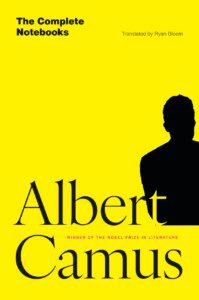
About The Complete Notebooks: Throughout his career, French writer and philosopher Albert Camus kept a series of notebooks that offers an unrivaled glimpse into the writer at his most personal and reflective. These notebooks contain his thoughts on politics, solitude, personal failings and regrets, his travels, and his relationships with friends and rivals. They also provide insight into his process as a thinker—his frustrations, his ideas for novels and plays (some pursued and others abandoned), his routines, his aspirations, and his self-recriminations.
For Camus devotees, there is no more intimate experience than reading these notebooks. On the one hand, his fallibility is on full display: He is irritated by mediocrity, frustrated with his health, plagued by insomnia, and miserable about life’s petty necessities. Yet, he is also intensely curious and observant, sometimes moved to rapture by landscapes and people. Readers will experience the bounty of Camus’s philosophical imagination and witness firsthand how his ideas take shape. The notebooks contain drafts of letters to friends and recorded reflections on the compromises that being in the world demands.
This publication marks the first time Camus’s complete notebooks have been published in one comprehensive volume. Expertly and movingly translated by Ryan Bloom with extensive footnotes contextualizing the entries, The Complete Notebooks will remain a literary treasure for years to come.
“What makes the working notebooks unique, as a translation project, is the great variety of modes and genres they contain. Camus worked in what he called ‘cycles,’ which consisted of a central idea—the absurd, for example, or rebellion—expressed in three different ways: as a novel, as a play, and as a philosophical essay. In addition to these core forms of cyclical expression, he also wrote short stories, lyrical essays, journalism, and speeches. And then, beyond the portions of the notebooks directly dedicated to his work. . .writings of a more personal nature begin to appear, as well. . .
The challenge for the translator, then, is that without the context that comes from a sustained plot or argument, some of the entries remain frustratingly inscrutable, and I was continually reminding myself that rendering that inscrutability, that not always trying to ‘solve’ it, was, given it is a feature of the notebooks, part of the point of the translation.” –Ryan Bloom